2025. 12. 10.
Cham Dance
An introduction to Cham dance, from sacred temple rituals to the folk dances performed at festivals.
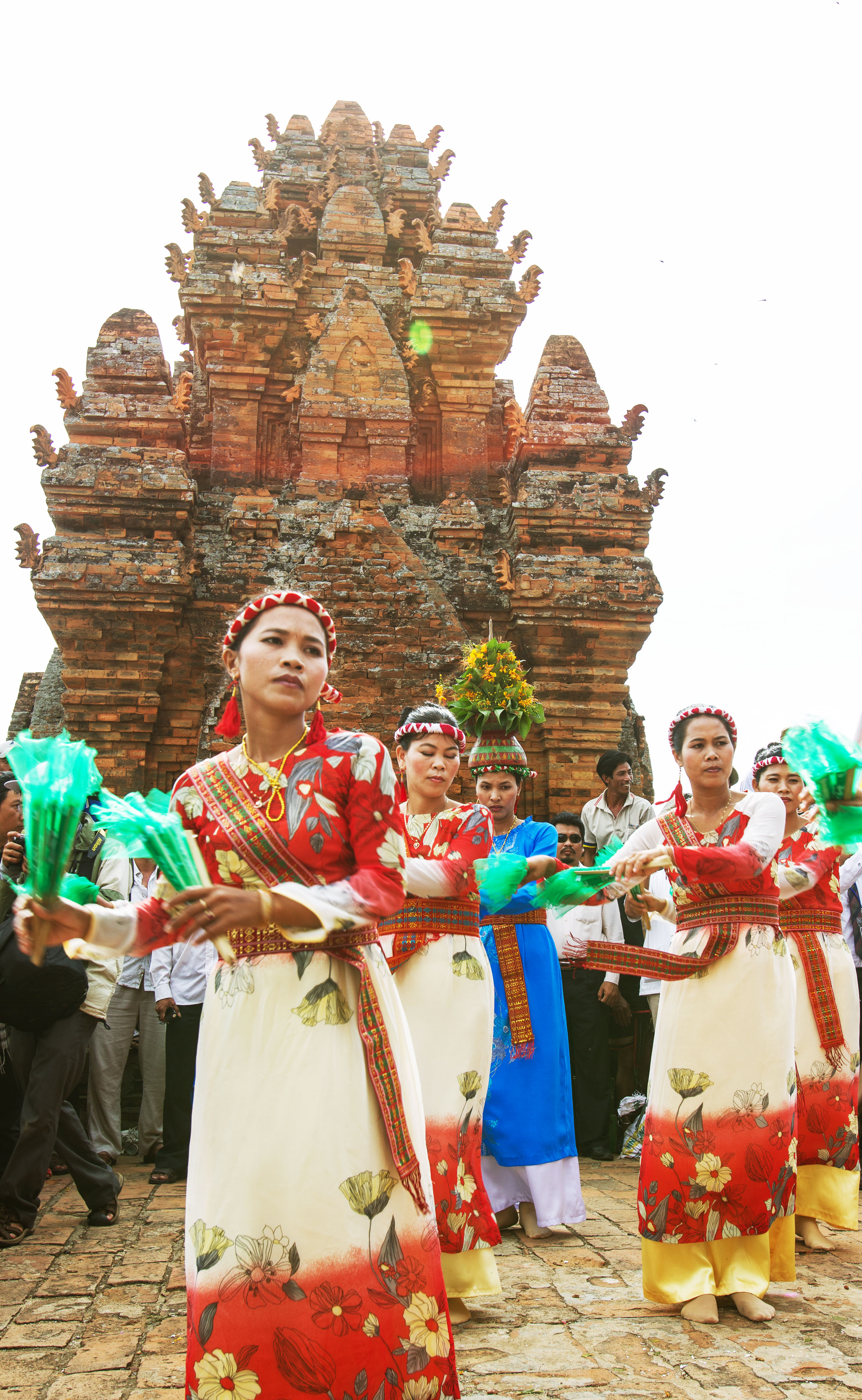
The dances performed amid the rousing drums and horns of the Kate festival season have long captivated audiences, carrying the unmistakable stamp of Cham culture. Cham dance divides into two distinct branches: sacred dance performed for religious rites, and folk dance performed in everyday life for entertainment and artistic display.
Sacred dances — offerings to the gods performed during rituals — reenact the images of the deities and may only be performed by dignitaries such as the Ka-ing priest, the Raja priestess, or the Pajau priestess during the Raja, Puis, and Rayak ceremonies. Each deity is paired with its own dance and props: a fan dance honors the god Po Tang, a rowing dance honors the sea god Po Riyak, and a fire-stamping dance honors the god Haniim Par, believed to drive away misfortune for the year ahead.
Beyond these sacred forms, Cham folk dance includes three dances commonly performed at festivals: the peacock (fan) dance, which mimics the graceful movement of a bird the Cham regard as a symbol of luck and prosperity; the water-jar dance, portraying young Cham women carrying water jars gracefully to the riverbank; and the scarf dance, performed with a traditional woven scarf, with distinct variations for men and women.
For the Cham, dance is never mere entertainment — it is a sacred thread connecting people to the divine, carrying prayers for favorable weather and bountiful harvests, and it remains a living, vibrant part of Cham community life today.